
Becoming an LED packaging enterprise with high core value

In the long journey of human pursuit of light, the emergence of LED technology is like a lightning bolt piercing the night sky. ButSensor LED beadsThe birth marks a qualitative leap in lighting technology from passive light emission to intelligent perception. This tiny device with a diameter of only a few millimeters is reshaping our relationship with light in astonishing ways, and its technological significance goes far beyond the boundaries of traditional lighting concepts.
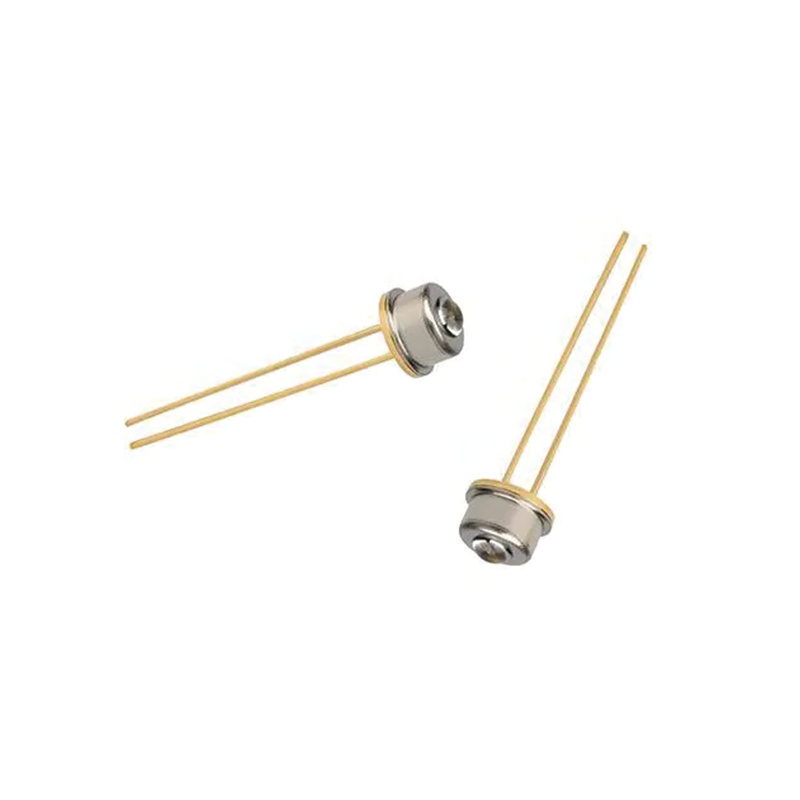
The core breakthrough of sensor LED beads lies in integrating the photoelectric sensing unit and the light-emitting unit into a single chip. This highly integrated design faces three major technical challenges: the elimination of spectral interference requires precise isolation of luminescent and photosensitive components at the nanoscale; The optimization of thermal management requires efficient heat dissipation within a limited space; The intelligence of signal processing relies on algorithm innovation with built-in microprocessors. The "Eagle Eye" series products developed by Panasonic Corporation in Japan have successfully controlled the environmental light detection error within ± 3% through quantum dot filter layers and three-dimensional stacking technology, creating a new industry standard.
The brilliance of this technology lies in its adaptive adjustment mechanism. Taking Philips' Hue ecosystem as an example, its smart light beads can continuously monitor the ambient light intensity and achieve seamless adjustment of color temperature from 2000K to 6500K through PWM dimming technology. What's even more amazing is that some laboratory prototypes already have the ability to recognize specific spectral features, such as the plant growth LED developed by Osram in Germany, which can detect chlorophyll reflectance, automatically adjust the ratio of red and blue light, and increase photosynthetic efficiency by 27%.
In the wave of Industry 4.0, sensor LED chips are becoming a key node in the Internet of Things. The typical application of the automotive industry is impressive: the intelligent light bead group embedded in the Audi matrix headlights can track the position of the oncoming vehicle in real time, dynamically adjust the lighting area at a frequency of 500 times per second, ensuring the driver's field of view and avoiding glare interference. In the medical field, more sophisticated applications have emerged - the endoscopic lighting system developed by Boston Scientific in the United States. Its front-end integrated micro sensor LED can detect tissue oxygenation and real-time indicate ischemic areas through color changes, providing decision support for surgeons.
The cross-border integration of this technology has given rise to many unexpected innovations. The "Optical Communication Positioning System" developed by University College London utilizes an intelligent array of light beads on the ceiling, which can provide illumination and achieve centimeter level indoor positioning. More cutting-edge research comes from the MIT Media Lab, which is experimenting with lighting systems that can sense physiological signals in the human body: when the LED detects changes in the user's pupil dilation or skin conductance response, it can automatically adjust the lighting parameters to alleviate stress reactions. This "emotional lighting" has great potential in the field of mental health.
Standing at the critical point of technological development, sensor LED beads are breaking through the physical limitations of traditional lighting. The "Intelligent Photon" project funded by the US Department of Energy has developed flexible LED chips with a thickness of only 0.2 millimeters, which can be attached to any surface like wallpaper. A more revolutionary breakthrough may come from quantum dot technology - experiments at the University of Cambridge have shown that quantum dot sensor LEDs can theoretically achieve single photon level light intensity detection and emission, which will further reduce energy consumption by an order of magnitude.
From Edison's invention of carbon fiber light bulbs to today's intelligent light bulbs with sensing capabilities, human control over light is undergoing a leap from quantitative to qualitative change. These tiny luminous objects are no longer just passive lighting tools, but have evolved into intelligent terminals with environmental perception, data processing, and autonomous decision-making capabilities. When every LED becomes the nerve endings of the Internet of Things, we are not only ushering in a lighting revolution, but also a new era of intelligent interconnection of all things. In this future where light and information are intertwined, sensor LED beads may become an invisible link in reconstructing the relationship between humans, the environment, and technology.
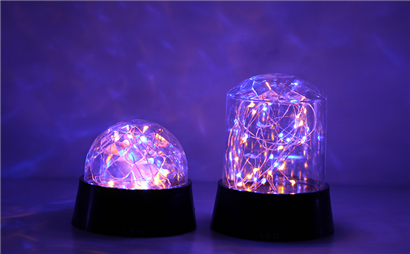
Sensing LED beads: illuminating the new realm of future technology!
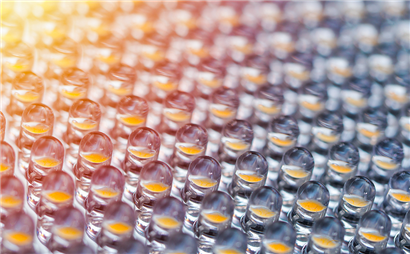
The latest sensing LED bead application for 5g infrared thermal imaging temperature measurement
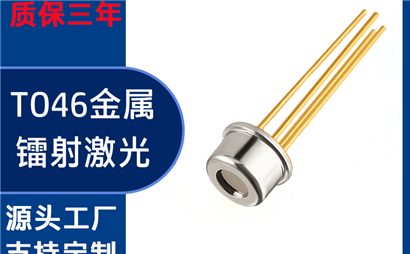
金属封装哪家厂家有做支持定制?与打样?
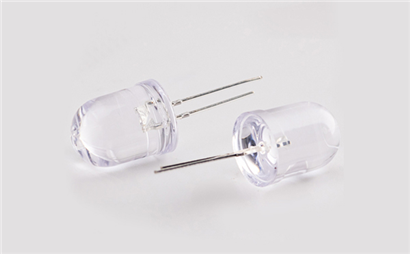
Characteristics and Applications of Infrared LED Beads
Address: 5th Floor, Building 12, Changfeng Industrial Park, Dongkeng, Fenghuang Street, Guangming District, Shenzhen, Guangdong Province
Phone: 17727428719 (Manager Liu)
Email: led_best@163.com

Copyright © 2023 Tianshi All Rights Reserved 粤ICP备2021179733号