
Becoming an LED packaging enterprise with high core value

1、 Working principle of infrared receiving LED beads
Infrared receiving LED beadsIt is a photoelectric device that converts infrared light signals into electrical signals, with a PN structure made of photosensitive materials such as silicon or germanium as the core. When infrared light of a specific wavelength (usually 850-940nm) is irradiated onto the receiving end, photon energy excites electron transitions, generating photocurrent, which is amplified by internal circuits and outputs an electrical signal. Its work requires the use of infrared emission tubes (such as IR LEDs) to form a complete infrared communication system.
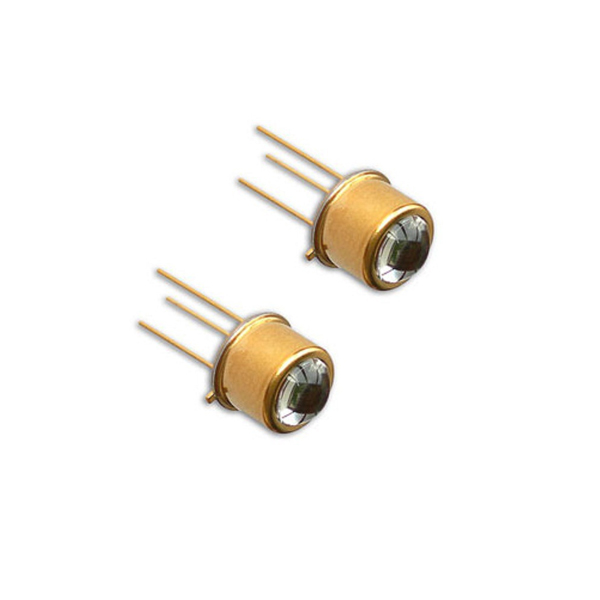
2、 Key characteristic parameters
Receiver sensitivity: measures the response capability of a device to weak infrared signals, measured in μ W/cm ², with lower values indicating higher sensitivity.
Response time: The typical value is 5-20 μ s, which affects the signal transmission rate.
Anti interference capability: The built-in optical filter can suppress visible light interference and improve signal-to-noise ratio.
Working voltage: commonly 1.2-1.5V (low voltage type) or 5V (standard type).
3、 Typical application scenarios
Remote control of household appliances: infrared signal reception for devices such as televisions and air conditioners.
Security system: infrared radiation alarm, human body sensing module.
Industrial automation: assembly line object detection, equipment status monitoring.
IoT devices: data transmission of low-power sensor nodes.
4、 Selection and usage precautions
Wavelength matching: The peak wavelength of the receiving tube should be consistent with that of the emitting tube (e.g. 940nm paired with 940nm).
Perspective selection: Narrow perspective (± 15 °) is suitable for directional communication, while wide perspective (± 60 °) is used for multi angle reception.
Environmental adaptability: For outdoor applications, it is necessary to choose models with waterproof adhesive packaging (such as epoxy resin).
Circuit design: It is recommended to connect current limiting resistors (usually 2-10k Ω) in series and decoupling capacitors (0.1 μ F) in parallel.
5、 Common troubleshooting
No response: Check if the polarity is reversed (with the long pin being the anode), or test the supply voltage.
Signal instability: Eliminate strong environmental light interference or add a light shield.
Short transmission distance: Confirm that the transmission power matches the receiving sensitivity, and if necessary, add lens focusing.
Conclusion
As a key component for non-contact signal transmission, the performance of infrared receiving LED beads directly affects the reliability of the system. With the development of smart homes and Industry 4.0, high-sensitivity and anti-interference digital receiving modules (such as integrated IC packaging) will become a trend. Engineers need to comprehensively consider optical parameters, electrical characteristics, and environmental factors when selecting models to achieve optimal design.
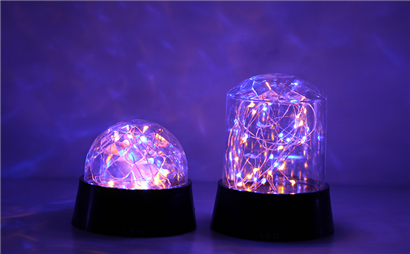
Sensing LED beads: illuminating the new realm of future technology!

The latest sensing LED bead application for 5g infrared thermal imaging temperature measurement
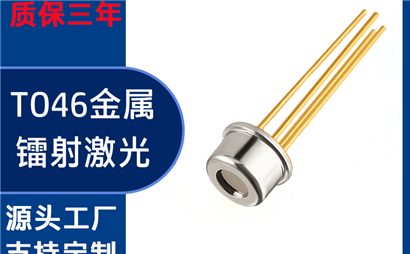
金属封装哪家厂家有做支持定制?与打样?
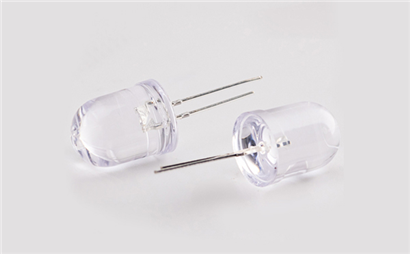
Characteristics and Applications of Infrared LED Beads
Address: 5th Floor, Building 12, Changfeng Industrial Park, Dongkeng, Fenghuang Street, Guangming District, Shenzhen, Guangdong Province
Phone: 17727428719 (Manager Liu)
Email: led_best@163.com

Copyright © 2023 Tianshi All Rights Reserved 粤ICP备2021179733号