
Becoming an LED packaging enterprise with high core value

In the manufacturing of high-power infrared LED chips, pure gold wire is widely used as a bonding material (i.e. the wire connecting the chip and external circuit), which is the result of multiple scientific considerations and process optimization. The following is the analysis of the core reasons:
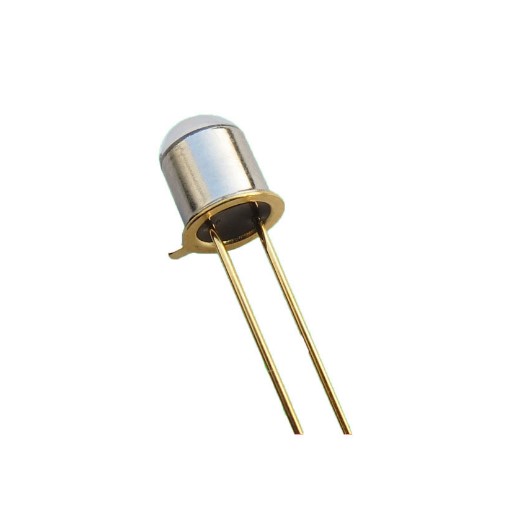
1. Excellent conductivity and low resistance loss
The conductivity of gold is second only to silver and copper, but compared to copper, gold has extremely strong antioxidant capacity at high temperatures. When high-power LEDs work, the current can reach several hundred milliamps to several amperes. The low resistance characteristic of pure gold wire can significantly reduce energy loss in current transmission and avoid performance degradation caused by heat generation.
Data support: The resistivity of gold is only 2.44 × 10 ⁻⁸Ω· m (20 ℃), while aluminum is 2.82 × 10 ⁻Ω· m, and gold has better resistance stability at high temperatures.
2. Superb resistance to high temperatures and fatigue
High power LED chips often have junction temperatures exceeding 100 ℃ during operation, and ordinary metal wires (such as aluminum) are prone to breakage due to mismatched thermal expansion coefficients. The ductility (elongation rate of over 30%) and high temperature resistance (melting point of 1064 ℃) of pure gold wire can withstand long-term thermal cycling impact.
Case comparison: In the 1000 hour high temperature and high humidity test at 85 ℃/85% RH, the failure rate of gold wire bonding is more than 90% lower than that of aluminum wire.
3. Chemical inertness ensures long-term reliability
Gold hardly reacts with oxygen and sulfides in the air, avoiding the formation of insulating oxide layers (such as copper wire easily generating CuO). Infrared LEDs are commonly used in harsh environments such as industrial heating and security monitoring, and the corrosion resistance of the gold wire ensures a service life of over 20 years.
Industry standard: Gold wire bonding is mandatory for military/automotive grade LEDs as they have passed MSL-1 (highest humidity sensitivity level) certification.
4. Process adaptability and yield improvement
The gold wire has a moderate hardness (Vickers hardness 25) and can form atomic level diffusion connections with chip electrodes (usually gold or silver coatings) during ultrasonic bonding without damaging brittle semiconductor structures. In the bonding tensile test, the gold wire can withstand an average tensile force of 5-10 gf, far exceeding the 3-5 gf of aluminum wire.
Cost trade-off: Despite the high gold price (about 60 yuan/meter), packaging accounts for over 40% of the cost of a single high-power LED. The yield improvement brought by gold wire (reducing the risk of virtual soldering/wire breakage) actually reduces the overall cost.
5. Special considerations for infrared characteristics
The wavelength range of infrared LED (850-940nm) is sensitive to material reflectivity. The reflectivity of gold in the near-infrared band exceeds 95%, which can reduce the absorption loss of photons at the wire and improve the light efficiency by 5% -8%.
Conclusion
Although pure gold wire has a high cost, its comprehensive advantages in conductivity, heat resistance, corrosion resistance, and process compatibility make it an irreplaceable "gold standard" for high-power infrared LEDs. With the advancement of packaging technology (such as the rise of gold coated copper composite wires), a new balance between cost and performance may be found in the future, but currently high-end applications are still dominated by pure gold wires.
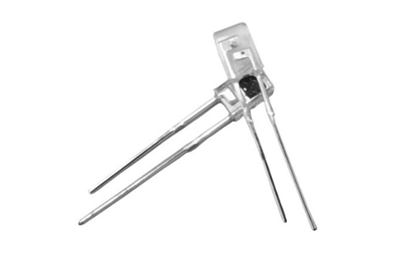
Waterproof and moisture-proof structure of infrared transmitting and receiving tube
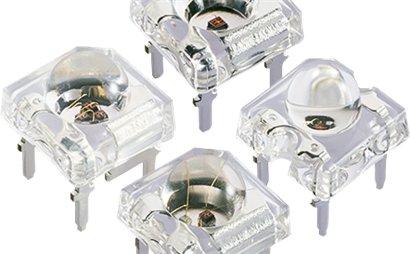
How to Choose Piranha Lamp Beads
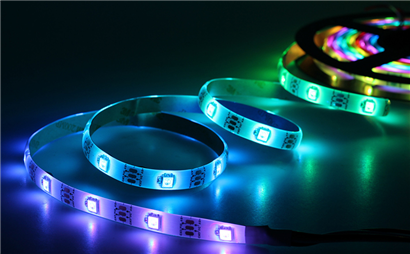
The difference between infrared LED beads at 120 degrees and 60 degrees
How to distinguish between infrared transmitting tubes and receiving tubes?
Address: 5th Floor, Building 12, Changfeng Industrial Park, Dongkeng, Fenghuang Street, Guangming District, Shenzhen, Guangdong Province
Phone: 17727428719 (Manager Liu)
Email: led_best@163.com

Copyright © 2023 Tianshi All Rights Reserved 粤ICP备2021179733号