
Becoming an LED packaging enterprise with high core value

In the evolution of UV curing technology, infrared LED beads are quietly becoming a key factor that changes the game rules. This seemingly ordinary luminescent element, with its unique photophysical properties, is reshaping the efficiency standards in the industrial curing field.
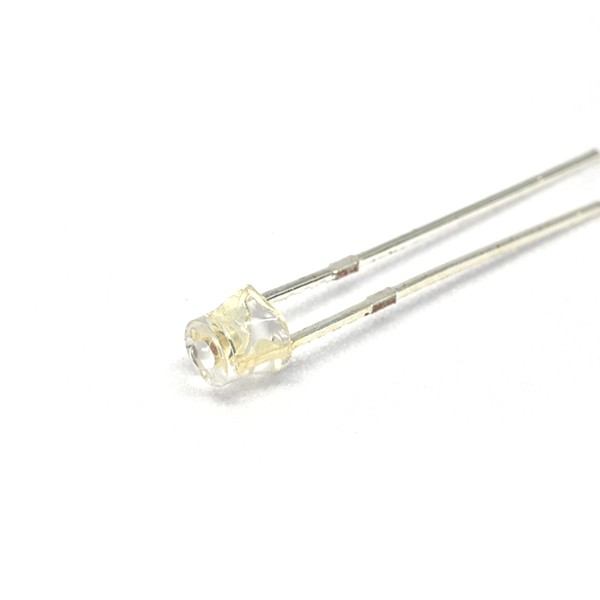
From the perspective of spectral characteristics, the near-infrared light emitted by infrared LED beads at 780-1400nm forms a perfect complementary effect with the UV curing system. After the traditional UV light source completes surface curing, infrared radiation can penetrate deep into the material and accelerate the diffusion and migration of unreacted monomers through molecular vibration, resulting in a 20-30% increase in curing depth. This "inside out" curing mechanism is particularly suitable for the treatment of thick coatings or paint systems, effectively solving the common pain point of "surface drying but not inside" technology in traditional UV curing.
In terms of thermal management, infrared LEDs demonstrate stunning precision control capabilities. Unlike traditional heating methods, LED arrays can achieve a temperature control accuracy of ± 1 ℃ through PWM dimming. This "alternating cold and hot" curing mode can increase the cross-linking efficiency of certain special coatings by more than 40%. The actual test data of a certain automotive paint manufacturer shows that after using infrared assisted curing, the production line speed increased from 3m/min to 5m/min, while energy consumption decreased by 15%.
In terms of system integration, the modular design of infrared LED beads has given the production line unprecedented flexibility. The failure of a single light bead will not cause system paralysis, and it can be arranged in 3D according to the shape of the product, which shows great advantages in the solidification scene of irregular parts. More noteworthy is the synergistic use of infrared LED and UV LED, which shortens the response time of the composite curing system to milliseconds, laying the foundation for real-time control of future intelligent curing systems.
From the perspective of full lifecycle cost analysis, the 50000 hour service life of infrared LED chips, combined with their electro-optical conversion efficiency of over 90%, results in a comprehensive usage cost that is only one-third of that of traditional thermal curing equipment. This economic benefit will generate significant multiplier effects in mass production, which is also the fundamental reason why more and more manufacturers are listing it as a standard configuration.
With the development of materials science and the emergence of new photothermal dual curing systems, the technical value of infrared LEDs in UV curing will be further amplified. It can be foreseen that this' invisible light 'will continue to drive the evolution of curing technology towards greater efficiency, precision, and energy efficiency.
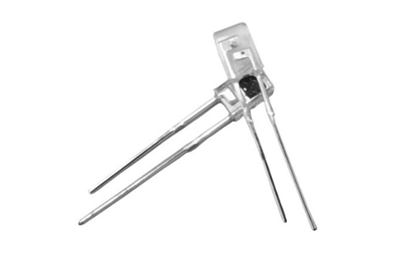
Waterproof and moisture-proof structure of infrared transmitting and receiving tube
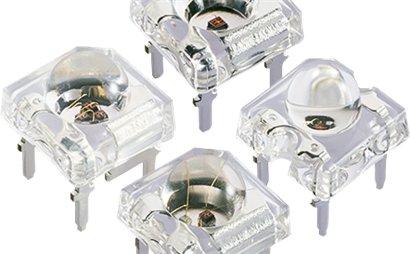
How to Choose Piranha Lamp Beads
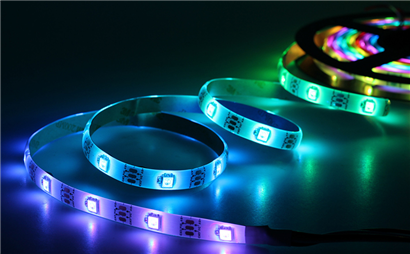
The difference between infrared LED beads at 120 degrees and 60 degrees
How to distinguish between infrared transmitting tubes and receiving tubes?
Address: 5th Floor, Building 12, Changfeng Industrial Park, Dongkeng, Fenghuang Street, Guangming District, Shenzhen, Guangdong Province
Phone: 17727428719 (Manager Liu)
Email: led_best@163.com

Copyright © 2023 Tianshi All Rights Reserved 粤ICP备2021179733号